A plate can look sturdy on the shelf and still crack after repeated dishwasher cycles. Heat, detergent, water pressure, glaze, and decorative finishes all affect how tableware holds up. Porcelain, tempered glass, and some stoneware are often labeled dishwasher-safe, but material alone is not a guarantee. Gold rims, hand-painted patterns, and older or damaged glazes may need gentler care. Check the maker’s care instructions before loading a new set. Labels matter.
The ENERGY STAR Version 7.0 specification sets water-use limits of 3.2 gallons per cycle for standard-size certified dishwashers and 2.0 gallons for compact models. Those figures describe machine efficiency, not dishware durability, but they show why plates face repeated, tightly controlled wash cycles. For shoppers, how to choose dishwasher-safe plates and bowls starts with the product label, then considers finish, shape, and stacking fit. A wide bowl may touch a heating element or block spray; a chipped rim can worsen with repeated washing. I would not treat “dishwasher-safe” as a promise of endless life. It is useful guidance, not a substitute for careful loading or the manufacturer’s instructions. A little uncertainty is sensible.
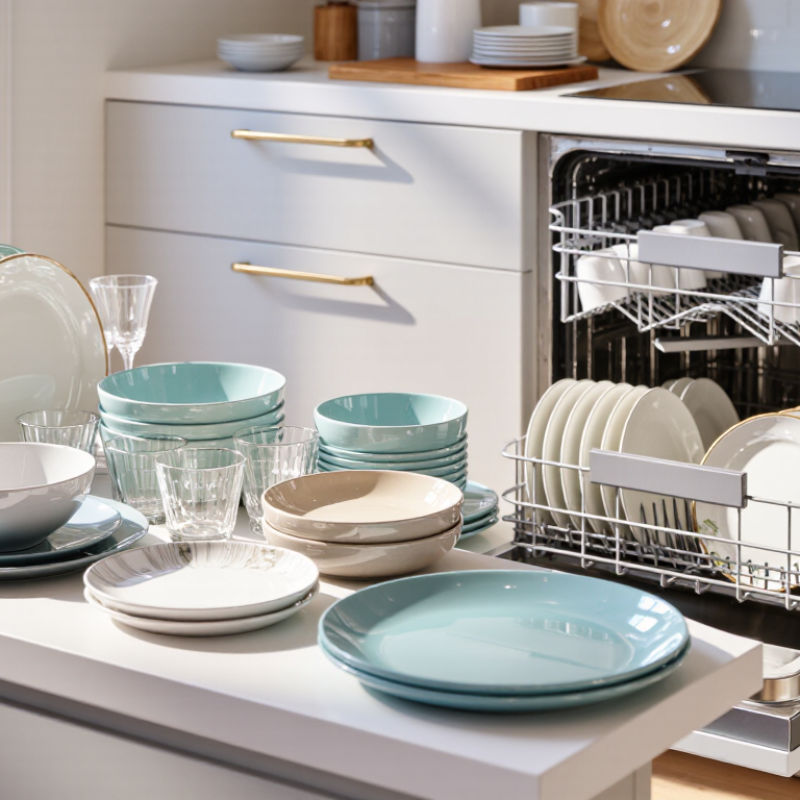
The clearest sign is a dishwasher-safe statement on the plate’s underside, original packaging, or care sheet. Some dishes use an icon showing plates on a rack beneath water droplets, but symbols vary. Check any printed wording too. A small mark can be easy to miss under the foot ring. Look closely. If the label is unclear, consult the maker’s care instructions rather than guessing from appearance alone. No marking does not automatically mean a dish is unsafe; it means the guidance is uncertain.
Material offers clues, not a guarantee. Many everyday ceramic and tempered-glass pieces are made for machine washing, while delicate glazing, hand-painted details, metallic edging, or bonded decorations may need gentler care. Inspect the surface for fine cracks, worn decoration, or a rough patch where the glaze has chipped. Damage can worsen with hot water and detergent. That matters. I still pause over older dishes with no care information, even when they look sturdy. When a piece is sentimental or costly, handwashing is the more cautious choice. A dishwasher-safe label also does not promise that every wash cycle or detergent will suit every dish.
How to identify dishwasher-safe materials
This qualitative guide summarizes common care advice, not a guarantee for every item. A score of 2 means the material is often dishwasher-safe when the item is approved by its maker; 1 means suitability depends on the product and cycle; 0 means hand-washing is usually recommended. Check the item’s care label or manufacturer instructions, especially for plastics, decorated ceramics, and coated items.
Porcelain and fully glazed ceramic plates and bowls usually tolerate dishwasher cycles well. Their dense surfaces resist water, and smooth glaze helps keep food from clinging. Stoneware can also be suitable when its glaze is intact and the maker approves machine washing. Check the label. Handmade pieces vary, so a familiar-looking bowl is not always made to handle heat and detergent.
Tempered glass is another dependable choice for everyday dishes. Load it with a little space between pieces to prevent knocks and cloudy residue. Stainless-steel bowls generally clean well, though they can be scratched by contact with other metal items. Keep delicate finishes, painted details, and metallic edging out of the dishwasher unless care instructions specifically allow it.
The confusing part is that “dishwasher-safe” does not mean damage-proof. Repeated hot cycles may dull some surfaces, and sudden temperature changes can stress glass. I would not assume an older or chipped dish is safe just because similar pieces are. When in doubt, hand-wash it.
A glossy plate is not automatically dishwasher-safe. The glaze may be durable, while a printed pattern on top can fade. Look closely at the rim and center: gold or silver luster, metallic bands, and overglaze decals often wear faster than color sealed beneath the glaze. Keep them out of hot, high-alkaline cycles unless the maker confirms testing.
Testing details matter. EN 12875-1 sets out a repeated machine-washing method for household utensils, and ASTM C738 evaluates ceramic ware’s resistance to chemical attack. These tests assess different risks; neither makes every finish equally durable. Look for published results that state the cycle count and test conditions, not just a “dishwasher-safe” label. A stated 125-cycle test is more useful than an unsupported claim, though it still cannot predict every home machine.
Watch for fine cracks in the glaze, called crazing. Detergent and moisture can collect in those lines. Handmade finishes vary, too. I would hand-wash a plate with an uncertain metallic accent, even if its plain shape seems sturdy. Labels help, but they leave room for doubt.
Hand-painted plates and bowls often need handwashing, especially when their decoration sits on top of the glaze. Repeated hot-water cycles and detergent can fade fine painted lines or dull metallic details. Gold or silver rims are particularly vulnerable. One wash may look harmless; months of washing can tell a different story. Check the care label before loading them.
Wooden bowls should generally stay out of the dishwasher. Heat and long exposure to water can dry, warp, or split the wood, and the grain may feel rough afterward. Handmade pottery is less predictable. Some pieces are fully glazed and dishwasher-safe, while others have porous clay, delicate finishes, or small cracks that can trap water. I’m not always able to tell by looking. Check the maker’s care instructions.
Older china and crystal can also be fragile, even when they seem sturdy in the hand. Keep pieces with hairline cracks or loose decoration away from the machine. Wash them gently with mild soap and a soft sponge. It takes longer. But a chipped rim is harder to fix than a few minutes at the sink.
| Plate or Bowl Material | Usually Dishwasher Safe? | Recommended Dishwasher Placement | When Handwashing Is Better |
|---|---|---|---|
| Glazed porcelain | Usually, if the maker’s care instructions permit it | Top or bottom rack; avoid crowding and contact between pieces | Handwash pieces with metallic decoration, delicate hand-painted details, or existing chips and cracks. |
| Glazed stoneware | Often, but dishwasher suitability varies by glaze and construction | Top or bottom rack, with space between dishes | Choose handwashing for unglazed, cracked, unusually delicate, or maker-labeled handwash-only pieces. |
| Bone china | Often, when labeled dishwasher safe | Top rack is a cautious choice; secure pieces so they cannot knock together | Handwash pieces with gold or silver trim, fragile decoration, or no clear care guidance. |
| Glass | Many everyday glass plates and bowls are dishwasher safe | Use the rack recommended by the manufacturer; keep pieces from touching | Handwash crystal, thin decorative glass, and glass with painted or metallic finishes unless labeled dishwasher safe. |
| Tempered glass | Usually, if labeled dishwasher safe | Load securely and avoid sudden temperature changes | Handwash if damaged or if the care label advises against dishwasher use; thermal shock can damage glass. |
| Plastic labeled dishwasher safe | Yes, when the item is specifically labeled for dishwasher use | Top rack, away from heating elements | Handwash plastics without dishwasher-safe labeling, or if they are thin, warped, or showing damage. |
| Melamine | Many items are labeled dishwasher safe, commonly for the top rack | Top rack, following the product’s care instructions | Handwash if the maker advises it or the surface is chipped or cracked. Do not use melamine dinnerware in a microwave unless the maker explicitly says it is microwave safe. |
| Wood or bamboo | Generally no | Not recommended for dishwasher use | Handwash promptly with mild soap and water, then dry thoroughly; prolonged heat and moisture can cause warping or cracking. |
| Earthenware or unglazed pottery | Not reliably; porosity and decoration vary | Use a dishwasher only if the maker specifically confirms it is safe | Handwash porous, handmade, cracked, or unglazed pieces, which can absorb water or be damaged by detergent and heat. |
| Metallic-trimmed or decorated dishes | Often not recommended | Do not load unless the care instructions explicitly allow dishwasher use | Handwashing helps protect gold or silver bands, metallic finishes, and delicate painted designs from wear. |
Care varies by product, glaze, decoration, and dishwasher cycle. Check the manufacturer’s instructions, and do not put chipped or cracked dishes in the dishwasher.
A dishwasher-safe mark is a useful starting point, but read the full care label. It may specify top rack only or recommend skipping heated drying. Check the underside of plates and bowls, where symbols or small-print instructions often appear. If a label is missing, look for delicate details such as metallic trim, hand-painted designs, or hairline cracks. These can fade, loosen, or worsen with heat and detergent. When unsure, hand-wash the piece; I have learned that guessing can leave a favorite bowl looking dull.
Load dishes so water can reach every surface. Place plates upright between the rack tines, not pressed tightly together. Angle bowls downward or toward the center, leaving space between them. Keep smaller items away from the spray arms, then spin the arms by hand before starting the cycle. A blocked arm can leave food behind, even when the dishes looked neatly arranged.
Tips: Put heavier, sturdy plates on the lower rack and follow any top-rack instruction for lightweight dishes. Scrape off large food scraps, but avoid stacking bowls. Leave room for movement. If a dish comes out cloudy or has a damaged finish, pause and reconsider its care label and dishwasher placement.
Porcelain, fully glazed ceramic, tempered glass, and many stainless-steel bowls usually clean well. Stoneware depends on its glaze and care instructions.
No. Printed patterns, hand-painted details, and metallic edging may fade or wear, even when the plate itself seems sturdy. Looks can mislead.
Inspect its rim and center for gold or silver trim, decals, or fine glaze cracks. Hand-wash uncertain pieces.
Read the full care label and check the underside for symbols or small-print instructions. Some dishes require the top rack or no heated drying.
No. Repeated hot cycles can dull surfaces, and sudden temperature changes can stress glass. Labels help, but they do not predict every home machine.
Stand plates between rack tines without pressing them together. Angle bowls downward or toward the center, leaving space between pieces.
Keep small items clear of the arms, then spin the arms by hand before starting. A blocked arm can leave food behind.
Pause before washing it again. Recheck its label and placement, and hand-wash it if the finish is uncertain. I still hesitate with older, chipped pieces.
Dishwasher-safe plates and bowls are usually identified by a dishwasher-safe symbol or care instructions from the maker, but material alone can offer useful clues. Everyday ceramic, porcelain, tempered glass, and many stainless-steel items often tolerate dishwasher cleaning, while sudden temperature changes and repeated washing may still affect their condition. Understanding how to choose dishwasher-safe plates and bowls means considering both the base material and the surface finish.
Glazes, metallic details, hand-painted designs, decals, and delicate finishes can fade, crack, or wear in a dishwasher. Unglazed pottery, some earthenware, antique pieces, and items with wooden or bonded parts may be better handwashed, especially when their care guidance is unclear. Check labels or product instructions before washing, and avoid assuming that a plate or bowl is safe based on appearance. For safer loading, place dishes securely without overcrowding, keep them from touching where possible, and position bowls so water can reach their surfaces and drain away.

Auroch Kitchen