In 2026, China’s kitchenware market is shaped by practical design, material innovation, and growing attention to product lifespan. Shoppers and sourcing teams are looking beyond attractive labels toward clear material details, durability, and everyday performance. A pan that lasts for years may be a better choice than a trendy item that quickly needs replacing. So, what are the latest trends in eco-friendly kitchenware? This overview explores ten developments, from recycled stainless steel and responsibly sourced bamboo to glass storage and products designed for easier repair. Small choices matter.
The trends also reflect changing expectations in kitchens and supply chains. Buyers increasingly ask where materials come from, how items are made, and whether packaging can be reduced. Reusable food wraps, modular storage, and longer-lasting utensils offer useful examples, though availability and quality can vary by supplier. For manufacturers, credible product information matters as much as a green claim. Look for specific material descriptions, care instructions, and evidence supporting environmental statements. Still, no material is automatically sustainable. Bamboo can wear out, glass can break, and recycled content alone does not explain a product’s full impact. That deserves a closer look. The following guide weighs convenience against durability and considers what each trend may mean for households, retailers, and buyers in China. The aim is not to label every new product “eco-friendly,” but to help readers compare options with care.
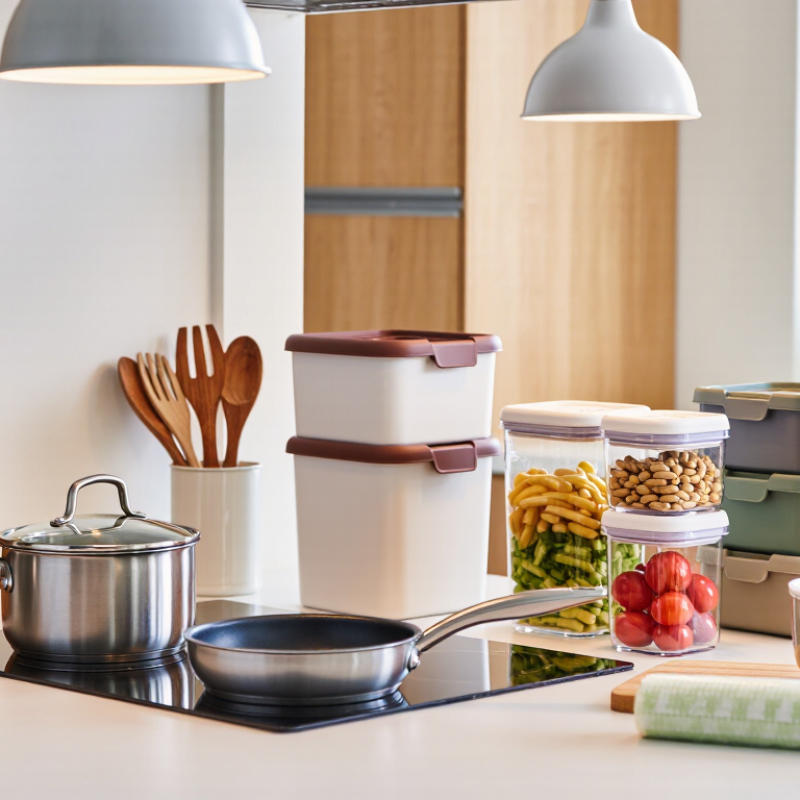
Defining Eco-Friendly Kitchenware and the Criteria for 2026 Trends in China
Eco-friendly kitchenware in China should mean lower impact across sourcing, production, use, and disposal—not simply bamboo or recycled plastic. Material labels alone are weak evidence. Buyers should check traceable composition, food-contact safety, and independent test reports, including relevant requirements under China’s GB 4806.1 series. Durability matters: a steel lunch box used for years may outperform a fragile “natural” item replaced every season. Repairable handles and replaceable seals are practical details. Small details count.
For 2026, useful criteria include measured material content, product lifespan, safe repeated use, and realistic end-of-life options in the buyer’s city. The OECD’s Global Plastics Outlook reported 353 million tonnes of plastic waste worldwide in 2019, with only 9% recycled. That makes recyclability claims worth checking against local collection systems. UNEP’s Food Waste Index Report 2024 estimated 1.05 billion tonnes of food waste in 2022; kitchen tools that support storage and portioning can help, though they cannot solve waste alone. These figures are global, not China-specific. This is an imperfect yardstick: robust lifecycle data for many kitchenware products remains hard to compare. A 2026 trend should be judged by evidence, not green wording.
China Top 10 Eco-Friendly Kitchenware Trends in 2026
Defining eco-friendly kitchenware and the criteria for 2026 trends in China
How to read this chart: Bars show the publication year of relevant Chinese national food-contact standards—not market size, adoption, or a ranking of trends.
Eco-friendly criteria: Prioritize durable, reusable products; responsibly sourced or recycled materials; low-waste design; and safe food-contact materials. Related 2026 design directions include reusable plasticware, paper-fiber products, metal cookware, bamboo and wood utensils, and products using coatings, rubber, composites, or food-contact inks. A material being renewable or recyclable alone does not establish that a product is environmentally preferable; assess its full life cycle and local end-of-life options.
Trends 1–3: Renewable, Recycled, and Plant-Based Materials
Renewable, recycled, and plant-based materials are reshaping kitchenware choices for 2026. The OECD’s Global Plastics Outlook (2022) estimates that only 9% of plastic waste was recycled globally in 2019. That gap makes recycled-content claims worth checking. Recycled plastic can work well in utensil handles or storage items, but heat resistance and food-contact suitability still matter.
Renewable options include bamboo, cork, and wood from traceable sources. A smooth bamboo board or cork trivet brings a warm, tactile finish to a kitchen. The detail matters. European Bioplastics’ 2024 market data reports global bioplastics production capacity of 2.47 million tonnes that year, projected to reach 5.73 million tonnes by 2029. Capacity is not the same as actual kitchenware production, though.
Plant-based materials such as starch-based composites can reduce reliance on fossil feedstocks. But plant-based does not automatically mean biodegradable or home-compostable. Not automatically. A “natural” spoon may still use synthetic binders, and coatings can complicate disposal. The weak point is clear labeling: shoppers need to know the material composition, care limits, and end-of-life route. That information is still uneven.
China Top 10 Eco Friendly Kitchenware Trends in 2026? - Trends 1–3: Renewable, Recycled, and Plant-Based Materials
| Trend |
Material and Common Kitchenware |
Why It Is Considered |
Practical Advantages |
Key Considerations |
Suitable Uses |
| 1. Renewable materials |
Bamboo, cork, and wood from responsibly managed sources; commonly used for cutting boards, utensils, serving pieces, and handles. |
These materials come from biological resources that can be replenished. Bamboo is a rapidly growing grass, while wood and cork sourcing depends on how forests and harvesting are managed. |
Natural appearance; useful for lightweight utensils and serving items. Durable wooden utensils can be used repeatedly when cared for properly. |
Renewable does not automatically mean sustainably sourced. Check sourcing information and follow care instructions; many wooden items should not be soaked or put in a dishwasher unless the maker says otherwise. |
Reusable utensils, boards, trays, and non-heated serving accessories. |
| 2. Recycled materials |
Recycled glass, recycled metals such as aluminium or stainless steel, and recycled plastics used in selected containers or kitchen accessories. |
Using recovered material can reduce demand for virgin feedstock. The actual environmental benefit depends on collection, sorting, processing, product lifespan, and local recycling systems. |
Glass and metals can be durable and are widely recyclable where suitable collection systems exist. Recycled content can give material a productive use after recovery. |
Recyclability varies by material, product design, and local facilities. For food-contact products, use only materials and products that meet applicable food-contact requirements; not every recycled plastic is suitable for food use. |
Storage jars, drinkware, cookware, and non-food-contact organizers, depending on product specifications. |
| 3. Plant-based materials |
Plant fibers such as bagasse (sugarcane fiber), wheat straw, and bamboo fiber; some products also use plant-derived bioplastics such as PLA. |
Plant-derived feedstocks can replace some fossil-based or conventional materials. Their environmental profile depends on farming, manufacturing, product life, and disposal conditions. |
Can be molded into lightweight plates, bowls, trays, and selected food-service items. Some plant-fiber products are designed for single use, while others are reusable if specified by the manufacturer. |
“Plant-based” does not necessarily mean biodegradable or home-compostable. PLA generally requires suitable industrial composting conditions, and local facilities may not accept it. Check food-contact, heat, and disposal instructions. |
Food-service tableware, takeaway packaging, and selected household items suited to the product’s stated temperature and care limits. |
Reading the table: Material labels alone do not establish overall environmental performance. Consider verified sourcing, recycled content, durability, food-contact suitability, care requirements, and the disposal options available locally.
Trends 4–6: Reusable, Modular, and Long-Lasting Product Design
Reusable kitchenware is moving beyond simple cloth bags and storage jars. In China, 2026 designs increasingly pair everyday usefulness with less disposable packaging. A sturdy lunch box, refillable oil bottle, or washable food wrap can replace repeated single-use items. The best choice depends on routine. A container that is awkward to clean may sit unused, however sustainable its material sounds.
Modular products make small kitchens easier to manage. Stackable containers with compatible lids can fit narrow shelves, while detachable handles help cookware serve more than one purpose. But extra parts create extra seams, and seams can trap food. Long-lasting design matters just as much: thick walls, replaceable seals, smooth edges, and clear care instructions help products stay useful. Stainless steel and durable glass can last, but neither is automatically practical for every household. Weight and breakage risk deserve attention too.
Tips: Check whether lids and seals can be replaced before buying. Choose pieces that fit your existing shelves and washing routine. Keep the packaging details; care guidance is easy to lose. A modular set may look tidy on day one, but it can still become clutter if the pieces do not match real cooking habits.
Trends 7–8: Cleaner Manufacturing and Low-Waste Packaging
In 2026, cleaner kitchenware production in China will depend on measurable factory changes, not green slogans. The International Energy Agency estimates that industry uses about 37% of global energy. For cookware and utensils, that makes kiln efficiency, heat recovery, and renewable electricity relevant priorities. A factory manager can track energy per finished item, scrap rates, and water reused in cleaning. These numbers reveal whether a lighter-looking process is actually better. Small details matter. A cracked handle still becomes waste.
Low-waste packaging is the other practical shift. The OECD’s Global Plastics Outlook reports that the world generated 353 million tonnes of plastic waste in 2019, with only 9% recycled. That figure supports reducing packaging at source, rather than relying on recycling alone. For a ceramic bowl, molded paper inserts and a right-sized carton can replace excess plastic cushioning. For steel utensils, simple paper sleeves may be enough. Not perfectly. Paper can also be wasteful if it is oversized, heavily coated, or difficult to recycle locally. Buyers should ask suppliers for packaging weights, material specifications, and damage-rate records, then compare them against actual shipments. The uncomfortable part: less packaging is not always better if breakage rises. Define the trade-off, test it, and revise it.
Trends 9–10: Smart Purchasing and Evolving Sustainability Standards
Smart purchasing in 2026 means looking beyond a low unit price or a green label. Buyers can request clear material lists, food-contact test reports for the intended market, and care instructions before placing an order. Evidence matters. For a reusable lunch container, check whether the lid seal can be replaced and whether the body withstands repeated washing. Comparing expected service life with purchase cost gives a more useful picture than price alone.
Sustainability standards are also evolving. Claims such as “recyclable” or “compostable” need context: local facilities may not accept every material, and compostable products may require specific processing conditions. Ask suppliers to define recycled-content figures and provide supporting records. Requirements and test methods can differ by product and market, so buyers should verify current documentation rather than rely on a broad claim.
There is no perfect material choice. A bamboo handle may reduce reliance on some plastics, but coatings, adhesives, and disposal options still matter. That takes work. Procurement teams can compare durability, packaging, traceability, and end-of-life guidance in one checklist, then record where evidence is missing. Even careful checks will not resolve every trade-off, especially when suppliers use inconsistent terms.
Conclusion
This article explores what are the latest trends in eco-friendly kitchenware in China in 2026, beginning with the criteria that make a product genuinely sustainable. It considers material sourcing, durability, manufacturing impact, packaging, and whether products support responsible everyday use. Key material trends include renewable resources, recycled inputs, and plant-based alternatives, each offering ways to reduce reliance on conventional materials when thoughtfully produced.
The article also highlights reusable kitchen essentials, modular designs that can be adapted or repaired, and products built to last. Cleaner manufacturing methods and low-waste packaging are gaining attention, while more informed purchasing decisions help consumers assess sustainability claims and choose items suited to their needs. As standards and expectations continue to evolve, transparency and practical performance will be important. Together, these trends show how kitchenware can become more resource-conscious without sacrificing usefulness or convenience.

 Auroch Kitchen