Top 10 Eco Friendly Chopping Board Options for Buyers?

Time:2026-10-16 Author:Amelia
0%

Choosing a chopping board now involves more than color, price, or kitchen style. Buyers increasingly ask, “what are eco-friendly options for chopping boards?” The answer depends on material origin, durability, repairability, manufacturing, and end-of-life disposal. A board made from renewable material is not automatically sustainable. Its adhesives, transport distance, and replacement rate also matter.

The United Nations Environment Programme’s Global Resources Outlook 2024 reports that global material extraction has tripled over the past five decades. Without stronger action, extraction could rise another 60% by 2060. That warning makes long-lasting kitchen tools more important. The Forest Stewardship Council also encourages responsible forestry through traceable certification systems. However, certification is not a complete environmental scorecard.

Anne-Marie Bonneau, a respected zero-waste educator, says, “The most sustainable product is the one you already own.” Her point challenges constant replacement. Sometimes, maintaining an existing board is better than buying a new “green” product. Still, damaged surfaces need careful judgment. Deep grooves can trap food residue and moisture. The USDA Food Safety and Inspection Service recommends separate boards for raw meat and ready-to-eat foods, especially when cleaning is difficult.

This guide compares ten options, including certified hardwood, bamboo, recycled paper composite, cork, and reclaimed wood. Each choice has strengths and weaknesses. Bamboo grows quickly, but adhesives may complicate disposal. Reclaimed wood can reduce waste, yet its previous treatment may be unclear. There is no perfect board. The best choice balances safe food preparation, verified sourcing, long service life, and realistic care habits.
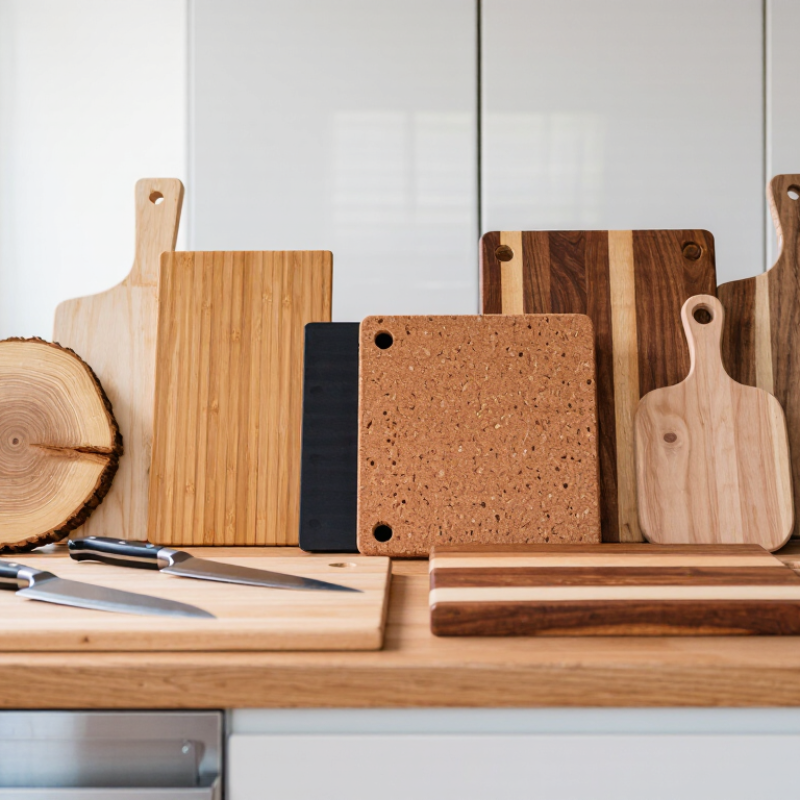
Top 10 Eco Friendly Chopping Board Options for Buyers?

Material Standards: Use ISO 14040 LCA, FDA Food Code, and NSF/ANSI 51

When comparing the top 10 eco-friendly chopping board options, material claims need evidence. ISO 14040 provides a framework for life cycle assessment, from raw material extraction to disposal. It does not automatically prove that one board is greener. Ask for defined boundaries, energy data, transport assumptions, and end-of-life details. Otherwise, “eco-friendly” remains a vague marketing phrase.

Food safety requires a separate check. The FDA Food Code offers practical guidance for food-contact surfaces, including cleanability, durability, and resistance to contamination. Local authorities may adopt different editions, so buyers should verify applicable requirements. A board with deep knife grooves can retain moisture and food particles. I have found that easy inspection matters more than attractive color.

NSF/ANSI 51 addresses materials and finishes used in commercial food equipment. Documentation should identify the exact material, coatings, adhesives, and intended use. This is important for composite boards, recycled plastics, and fiber-based products. Look for test reports or supplier declarations, not only a printed symbol. Certification can also have limits. A board may meet a material standard but still perform poorly under heavy cutting. For buyers, the strongest choice combines traceable LCA data, food-contact suitability, and a surface that remains smooth after repeated washing. Some evidence will still be incomplete. That deserves honest disclosure.

Hardwood Boards: Compare FSC Sources with ASTM D1037 Janka Ratings

When comparing the top 10 eco-friendly chopping board options, hardwood sourcing deserves close attention. FSC certification can indicate responsibly managed forests and verified supply chains. However, an FSC label does not prove that a board will resist knife marks, moisture, or warping. Check whether the claim covers the wood itself and whether certification details are traceable.

Janka hardness ratings offer a useful technical comparison. This test measures the force needed to press a steel ball halfway into wood. Higher values often suggest better resistance to dents. Hard maple, beech, and walnut can provide different balances of hardness, weight, and grain texture. ASTM D1037 includes a hardness method used for wood-based materials, but buyers should confirm the exact test and reporting basis. Ratings from different sources may not be perfectly comparable.

A strong board still needs careful use. Look closely.

Dense wood may protect against deep cuts, yet excessive hardness can feel harsh on knife edges. Grain direction, board thickness, glue quality, and drying conditions also affect performance. I would not choose a board from its Janka number alone. A poorly dried board can split beside a sink, even when its hardness looks impressive. Ask for FSC documentation, species identification, moisture guidance, and clear care instructions. Hand washing and regular oiling may extend service life, although maintenance advice can vary. That uncertainty deserves honest attention.

Bamboo and Cork Boards: Check Renewable Claims Against FAO Statistics

When shoppers compare chopping boards, “renewable” should not end the investigation. Bamboo grows quickly, but a board is not made from a living stem alone. It may contain adhesives, finishes, packaging, and energy-intensive processing. Cork is harvested from cork oak bark without cutting down the tree. That sounds cleaner, yet transport distance and manufacturing still matter. The claim sounds simple. It needs context.

FAO’s 2020 Global Forest Resources Assessment recorded about 4.06 billion hectares of forest worldwide. It also reported a net forest loss of roughly 178 million hectares between 1990 and 2020. These figures provide useful pressure indicators, not a product scorecard. FAO statistics do not automatically prove that a bamboo or cork board came from responsibly managed land. Bamboo stands can also fall outside conventional forest categories. Direct comparisons remain imperfect.

In my kitchen, a dense bamboo board stayed stable after hand washing, while a cork surface felt lighter under a knife. Neither material was flawless. Cork can mark sooner, and laminated bamboo may split after repeated soaking. Look for clear origin details, food-contact-safe finishes, low-emission adhesives, and disposal guidance. A credible seller should explain harvesting and processing, not merely print “eco-friendly” on the box. I would also measure lifespan. Replacing a cheap board twice can weaken its environmental advantage. My judgment remains provisional because statistics rarely follow one board from field to bin.

Recycled Boards: Contextualize Materials with EPA’s 2018 8.7% Plastic Rate

Top 10 Eco Friendly Chopping Board Options for Buyers?

A greener chopping board starts with the material, not the packaging. Buyers can consider recycled plastic, bamboo, reclaimed wood, cork, sustainably harvested hardwood, recycled paper composite, wheat-straw composite, glass, stainless steel, or responsibly sourced rubber. Each option has trade-offs involving durability, cleaning, knife comfort, and end-of-life disposal.

Recycled plastic boards deserve careful attention. According to the U.S. Environmental Protection Agency, only 8.7% of plastic municipal solid waste was recycled in 2018. This figure shows why using recovered plastic can matter, but it does not make every recycled board automatically sustainable. Check whether the board contains post-consumer material, rather than factory scraps. Ask how it can be recycled after heavy scoring.

Look closely.

A thick recycled board with a textured surface may stay stable during chopping and resist moisture around a busy sink. However, deep knife grooves can trap food particles, especially when washing is rushed. I have found that boards needing frequent replacement can undermine their environmental benefit. Some buyers may prefer bamboo or reclaimed hardwood for longer service, while others need the low maintenance of recycled plastic. Certification, material percentages, repairability, and local disposal rules provide stronger evidence than green-colored packaging. The imperfect choice is often the one used carefully for many years.

Ten-Board Scorecard: Combine Carbon, Hygiene, Durability, and End-of-Life Data

A useful ten-board scorecard compares bamboo, hardwood, cork, recycled plastic, new plastic, rubber, silicone, glass, stainless steel, and stone. Carbon scores should include manufacturing, transport, lifespan, and disposal. A light board is not automatically greener. A durable hardwood board may outperform a cheap board replaced yearly.

Hygiene needs practical testing. After cutting onions and raw vegetables, I inspect grooves, stains, odor, and drying time. Nonporous surfaces clean quickly, but knife marks can trap residue.

Wood needs careful washing and complete drying. Deep cracks are a warning. They can harbor moisture. Durability scores should record warping, edge damage, knife dulling, and stability on a wet counter. A board that slides is unsafe and frustrating.

End-of-life evidence often receives too little attention. Recycled plastic may last well, yet local recycling systems may reject mixed materials. Bamboo can be renewable, but adhesives complicate disposal. Glass and stone can survive decades, although their weight raises transport emissions and may damage knives. My scorecard uses documented material sources, care instructions, replacement rates, and realistic disposal routes. The weighting is imperfect. A household using one board for ten years may reach a different result than a busy kitchen replacing boards frequently. I would also record water, detergent, and maintenance use over time. Numbers need context.

FAQS

Does forest certification guarantee a durable hardwood chopping board?

No. Certification can support responsible sourcing and traceability. It does not prove resistance to knife marks, moisture, or warping. Check the wood species and certification records.

What does a wood hardness rating measure?

It measures the force needed to press a steel ball halfway into wood. Higher values often indicate better dent resistance. They do not guarantee comfortable knife use.

Are hardness ratings from different sources directly comparable?

Not always. Testing methods and reporting conditions may differ. Confirm the exact method, wood species, moisture level, and test basis. The number alone is incomplete.

Which hardwood features matter besides hardness?

Grain direction, board thickness, glue quality, and drying conditions affect performance. A poorly dried board can split near a sink. Hardness is only one clue.

Is recycled plastic automatically the most sustainable choice?

No. Check the percentage of post-consumer material and future recycling options. One national estimate recorded an 8.7% plastic recycling rate in 2018. That figure needs context. Frequent replacement can weaken the environmental benefit.

How can I inspect a chopping board for hygiene problems?

Look for deep grooves, stains, odors, cracks, and slow drying. Food residue can hide inside heavy knife marks. Wash the board thoroughly and let it dry completely. Deep cracks are warning signs.

Which materials offer different environmental trade-offs?

Bamboo, hardwood, cork, recycled plastic, rubber, glass, stainless steel, and composites differ widely. Consider production, transport, lifespan, maintenance, and disposal. There is no perfect material.

What should a practical ten-board scorecard include?

Record carbon impacts, cleaning needs, durability, knife comfort, stability, and end-of-life options. Include water, detergent, repairs, and replacement frequency. My weighting may still be imperfect. Use real household conditions.

How should I care for a wooden chopping board?

Hand wash it and follow suitable oiling guidance. Dry both sides, especially after use near a wet sink. Care instructions can vary. I would not assume one routine fits every board.

Conclusion

Choosing an eco-friendly chopping board requires more than selecting a natural-looking material. The key question is: what are eco-friendly options for chopping boards? A reliable comparison should consider life-cycle impacts through ISO 14040 principles, food-contact expectations under the FDA Food Code, and sanitation guidance from NSF/ANSI 51. Hardwood boards can be assessed by verifying responsible FSC sourcing and comparing durability through ASTM D1037 Janka-related testing. Bamboo and cork may offer renewable advantages, but their claims should be considered alongside broader agricultural and forestry data, including relevant FAO statistics.

A practical ten-board scorecard should balance carbon impact, hygiene, durability, maintenance, and end-of-life potential. Recycled boards also deserve careful context: material recovery claims should be weighed against the EPA’s reported 8.7% plastic recycling rate in 2018, rather than assumed to be automatically sustainable. This framework helps buyers compare options fairly and identify boards that perform well environmentally and practically over their full usable life.

Amelia

Amelia

Amelia is a seasoned marketing professional with a wealth of expertise in our company’s core offerings. With an unwavering passion for driving growth and innovation, she plays a pivotal role in shaping our marketing strategies and enhancing brand visibility. A key aspect of her responsibilities......