How to Prevent Cross Contamination While Chopping Food?

Time:2026-05-05 Author:Isabella
0%

Cross-contamination remains a significant concern in food safety. According to the Centers for Disease Control and Prevention, approximately 48 million people are affected by foodborne illnesses annually in the United States. One common cause is improper food preparation techniques, particularly during chopping. Understanding how to prevent cross-contamination while chopping is essential for anyone who handles food.

Studies show that using separate cutting boards for raw meats and vegetables can reduce the risk of contamination. A report from the Food Safety and Inspection Service indicates that 38% of foodborne illnesses can be traced back to cross-contamination in kitchens. Failure to implement proper precautions while chopping can lead to serious health risks. This reality emphasizes the need for food handlers to be more vigilant.

While it may seem cumbersome to follow strict guidelines, the consequences of neglecting food safety practices are far-reaching. Engaging in proactive measures not only ensures food quality but also protects consumers. Thus, learning how to prevent cross-contamination while chopping is not just beneficial—it's vital for health and safety.
How to Prevent Cross Contamination While Chopping Food?

Preventing Cross Contamination: Understanding the Risks in Food Prep

Understanding the risks in food preparation is crucial to prevent cross-contamination. Foodborne illnesses remain a significant public health concern. According to the CDC, about 48 million people in the U.S. get sick each year due to foodborne pathogens. Improper food handling during preparation can exacerbate this issue. The kitchen, often considered the heart of the home, can also become a hotspot for harmful bacteria.

When chopping food, the surface you use, along with the tools involved, plays a vital role. Research shows that 20% of cross-contamination occurs due to shared cutting boards and knives. Using a separate cutting board for raw meats and other foods helps minimize this risk. The materials of cutting boards matter too. Wooden boards can harbor bacteria, while plastic boards may be easier to clean. It’s important to regularly wash these tools in hot, soapy water and sanitize them.

Despite conventional wisdom, some home cooks ignore cleaning practices after food prep. A survey indicated that 60% of individuals do not clean their cutting boards between different food types. This neglect can harbor bacteria like Salmonella and E. coli, which can survive on surfaces for hours. Awareness and training are essential. Emphasizing basic hygiene practices can drastically reduce the chances of cross-contamination in food preparation settings.

How to Prevent Cross Contamination While Chopping Food? - Preventing Cross Contamination: Understanding the Risks in Food Prep

Risk Factor Source of Contamination Prevention Technique Notes
Raw Meat Bacteria from surfaces Use separate cutting boards Always sanitize after use
Vegetables Pesticides and soil Wash thoroughly under running water Consider using a vegetable brush
Dairy Products Bacteria from unpasteurized sources Ensure products are pasteurized Store at proper refrigeration temperatures
Cutting Tools Transferred bacteria from one food to another Regularly sharpen and sanitize knives Use different tools for raw and cooked foods
Hands Transfer bacteria from skin Wash hands with soap before and after Consider using gloves when necessary

Essential Tools and Equipment for Safe Chopping Practices

When it comes to safe food preparation, having the right tools can make a significant difference. Using separate cutting boards for raw meat and vegetables is essential. Research indicates that over 48 million people suffer from foodborne illnesses annually in the US. A simple yet effective way to prevent cross-contamination is to designate specific boards and knives for each food type. Color-coded tools can serve as a visual reminder and promote safer practices in the kitchen.

In addition to cutting boards, sanitizing solutions play a critical role. The USDA recommends using a mixture of one tablespoon bleach per gallon of water to sanitize surfaces effectively. Having a dedicated set of utensils for different food categories is also wise. Sponges and cloths should be frequently replaced or sanitized to reduce bacterial growth. A study from the CDC reveals that poorly maintained kitchen tools significantly contribute to contamination.

Even experienced cooks can overlook these details. An overwhelming 70% of home cooks admit to using the same knife for different food items without cleaning it in-between. This oversight can lead to severe consequences. Inspecting your tools regularly ensures they remain in good condition. Pay attention to nicks or rust on knives, as they can harbor bacteria. Keeping your kitchen tools organized and in check is key to preventing cross-contamination and ensuring food safety.

The Importance of Color-Coded Cutting Boards in Food Handling

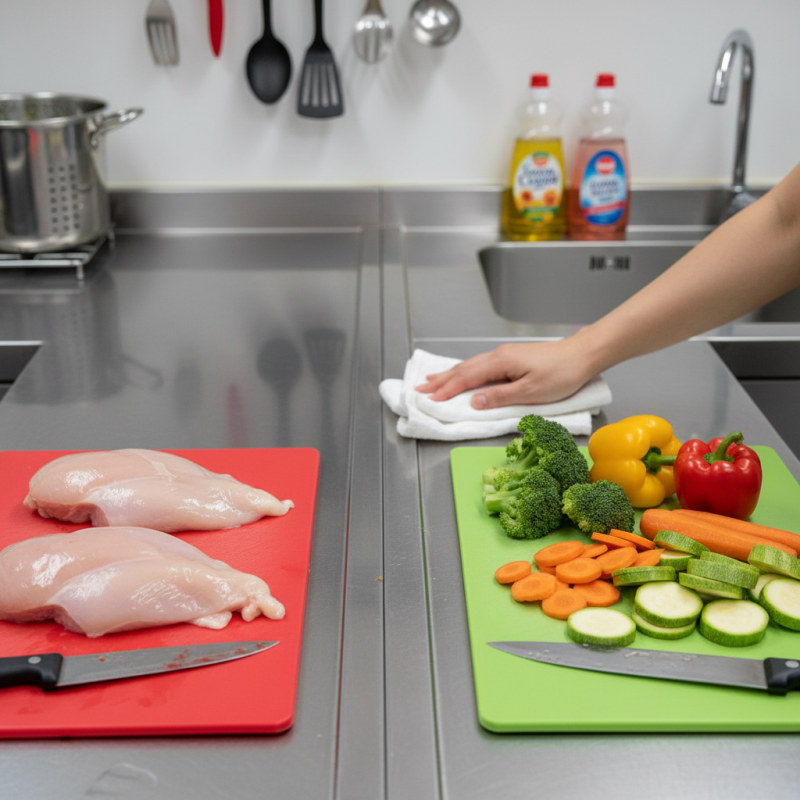
Color-coded cutting boards are essential for preventing cross-contamination in the kitchen. By using different colors for various food types, cooks can minimize the risk of harmful bacteria spreading. For instance, a red board is often designated for raw meat, while a green board is for fruits and vegetables. This visual differentiation helps keep food safe.

When chopping food, many overlook the importance of properly cleaning the boards. It's not enough to just use separate boards; thorough cleaning after each use is vital. Bacteria can linger on cutting surfaces even if they look clean. Often, cooks assume a quick rinse is sufficient, but it’s essential to use hot, soapy water. Not doing so can lead to serious foodborne illnesses.

Additionally, storing cutting boards correctly is often neglected. Keeping them in a well-ventilated area can help reduce moisture build-up, which promotes bacterial growth. A humid environment may compromise the hygiene of the boards. It's a reminder to reflect on our kitchen habits. A little extra care can significantly enhance food safety when handling different ingredients.

Best Practices for Sanitizing Cutting Surfaces and Utensils

Cross-contamination is a common issue in kitchen environments. Proper sanitization of cutting surfaces and utensils is crucial. The Centers for Disease Control and Prevention (CDC) report that around 48 million people in the U.S. fall ill from foodborne illnesses each year. Many of these cases can be traced back to unclean kitchen practices.

To effectively sanitize cutting surfaces, use hot soapy water for initial cleaning. After rinsing, apply a solution of one tablespoon of unscented liquid chlorine bleach per gallon of water. Let the surface air dry. This method is backed by the USDA, which emphasizes the importance of sanitation in preventing food contamination. Regularly inspect and maintain your cutting boards. Wood boards can harbor bacteria if not properly cared for.

When it comes to utensils, using separate tools for different food groups can help. For instance, designate specific knives for raw meat and vegetables. A study published in the Journal of Food Protection indicates that using distinct cutting boards reduces the risk of cross-contamination by 75%. Wash utensils with hot soapy water after each use and follow with a sanitizing solution. It's vital to remember that just washing isn't enough; sanitation is key to keeping kitchens safe.

Cross Contamination Risk Levels for Different Foods

Training and Awareness: Educating Staff on Cross Contamination Risks

Preventing cross-contamination while chopping food is essential in any kitchen setting. Educating staff about the risks associated with this issue is crucial. Many individuals underestimate how easily bacteria can spread during food preparation. Understanding the consequences can drive better practices.

Training sessions should focus on techniques that minimize cross-contamination. For instance, using separate cutting boards for raw meat and vegetables helps keep harmful bacteria at bay. Staff should practice washing their hands frequently. Many forget this simple but vital step. Adding visual reminders in the kitchen can serve as effective prompts.

Awareness is not just about following rules. It involves recognizing potential hazards. Staff should reflect on their habits. Are they cleaning tools and surfaces thoroughly? Regular checks can reveal areas for improvement. This creates a kitchen environment focused on safety and health. Continuous education and a commitment to best practices can reduce risks significantly.

FAQS

: Why is preventing cross-contamination important in food prep?

: It helps reduce foodborne illnesses, which affect about 48 million people in the U.S. annually.

What percentage of cross-contamination comes from shared tools?

Research indicates that 20% occurs due to shared cutting boards and knives.

How can I reduce cross-contamination while chopping?

Use separate cutting boards for raw meats and vegetables to minimize risk.

What cleaning method is effective for cutting surfaces?

Use hot, soapy water first, followed by a solution of one tablespoon bleach per gallon of water.

How often should kitchen tools be sanitized?

Regularly sanitize your tools and replace sponges or cloths to reduce bacterial growth.

What mistake do many home cooks make regarding cleaning?

About 70% of cooks use the same knife for different foods without cleaning it in-between.

Does the material of cutting boards matter?

Yes, wooden boards can harbor bacteria, while plastic boards are often easier to clean.

What should I inspect on my kitchen tools?

Look for nicks or rust on knives, as these can promote bacteria growth.

How often should cutting boards be washed?

It's crucial to wash them after each use, especially between different food types.

Can experienced cooks overlook sanitization?

Yes, even experienced cooks may neglect proper cleaning practices, which can lead to contamination.

Conclusion

To effectively address how to prevent cross-contamination while chopping food, it is crucial to understand the inherent risks associated with food preparation. Cross-contamination can occur when raw foods, especially meats, come into contact with surfaces or utensils meant for ready-to-eat items. Implementing essential tools and equipment, such as separate cutting boards and knives for different food types, can significantly reduce these risks.

One effective strategy is using color-coded cutting boards, which help in distinguishing between boards for raw proteins, vegetables, and cooked foods. Regular sanitization of cutting surfaces and utensils is critical to eliminate harmful bacteria. Moreover, training and raising awareness among staff about the dangers of cross-contamination are essential for maintaining food safety standards in any kitchen environment. By following these best practices, one can significantly minimize the risk of cross-contamination and ensure safe food handling.

Isabella

Isabella

Isabella is a dedicated marketing professional with a sharp focus on driving brand growth and engagement through strategic content creation. With an extensive background in digital marketing, she combines her passion for storytelling with her keen understanding of industry trends to deliver......