In the world of culinary efficiency, organizing tableware holds significant importance, especially in small kitchens. According to renowned kitchen organizer, Julie Sussman, "A well-arranged kitchen makes both cooking and cleanup faster." This insight emphasizes the need for effective strategies to maximize space.
Small kitchens often present unique challenges. However, with clever planning and creativity, they can transform into functional spaces. Stacking plates, using vertical storage, and integrating drawer organizers are just a few methods. A cluttered countertop can hinder cooking, making organization essential.
Thoughtful design can make a difference. Imagine a small kitchen where every item has its place. However, achieving this requires constant reflection and adjustment. Rethinking your storage solutions occasionally may be necessary. Ultimately, mastering **how to organize tableware efficiently in small kitchens** involves ongoing experimentation and dedication.
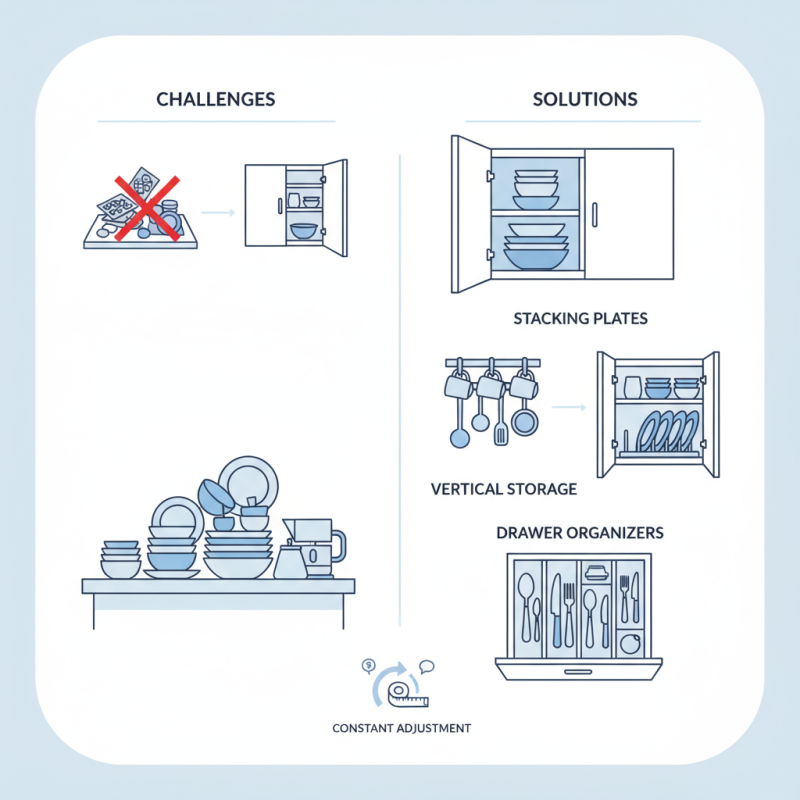
Maximizing storage space in small kitchens is essential for maintaining organization and efficiency. According to a report by the National Kitchen and Bath Association, 91% of homeowners prioritize function over aesthetics when designing kitchens. This insight underlines the need for strategic storage solutions in tight spaces.
Utilizing vertical space can significantly boost storage. Installing shelves above counters can hold plates, bowls, and cups. This tactic keeps them accessible while freeing counter space. Pegboards are another innovative solution. They can store pot lids, measuring cups, and kitchen gadgets within arm's reach. This can declutter countertops while keeping essential items visible.
Tips: Use drawer dividers to keep utensils organized. This saves time when cooking. Consider multi-functional furniture, like a kitchen island with storage. It can serve as a prep area and additional storage. Don't overlook hidden spaces; the area under the sink or behind cabinet doors can hold cleaning supplies or cutting boards, which often go unnoticed. Reflecting on your kitchen habits can reveal what works for you and what doesn’t. Small changes can lead to a more functional space.
| Storage Method | Description | Pros | Cons |
|---|---|---|---|
| Vertical Racks | Utilizes vertical space to store plates or bowls. | Maximizes space; easy access. | Takes wall space; may not fit large items. |
| Drawer Dividers | Organizes utensils and smaller items within drawers. | Improves organization; easy to locate items. | Limited to drawer space; requires precise measurement. |
| Open Shelving | Displays items on shelves for easy reach. | Visually appealing; encourages usage. | Items can collect dust; limited storage. |
| Mason Jar Storage | Stores dry goods and utensils in mason jars. | Clear containers; versatile; easy to refill. | Breakable; requires counter space. |
| Hang-On Wall Hooks | Hangs pots, pans, and utensils on hooks. | Saves cabinet space; easy to access. | Exposed items can look cluttered; limited to wall space. |
: It maintains organization and improves cooking efficiency.
Install shelves above counters to hold dishes and keep them accessible.
A pegboard stores kitchen gadgets and pot lids, keeping items visible and organized.
They keep utensils organized, saving time when cooking.
A kitchen island with storage serves as both a prep area and a storage solution.
The area under the sink or behind cabinet doors can hold frequently used items.
Hooks allow for hanging pots and pans, freeing up cabinet space.
Avoid overcrowding to maintain an efficient and tidy display.
It helps identify what works and what needs change, leading to better function.
They can clutter the space and reduce efficiency and style.
In small kitchens, knowing how to organize tableware efficiently is essential to maximize both space and functionality. One effective strategy involves selecting compact and multi-functional tableware options that can serve multiple purposes, reducing clutter. Additionally, creative solutions for organizing drawers and cabinets, such as using dividers and pull-out trays, can help keep items accessible yet tidy.
To further enhance the organization, utilizing vertical space through shelves or wall-mounted racks allows for smart arrangement of dishes, mugs, and utensils, freeing up valuable counter space. Finally, committing to regular maintenance and decluttering practices ensures the kitchen remains organized, making meal preparation and dining experiences more enjoyable and stress-free.

 Auroch Kitchen