Why Are Melamine Plates Popular in Cafes and Schools?

Time:2026-10-26 Author:Madeline
0%

Why Are Melamine Plates Popular in Cafes and Schools?

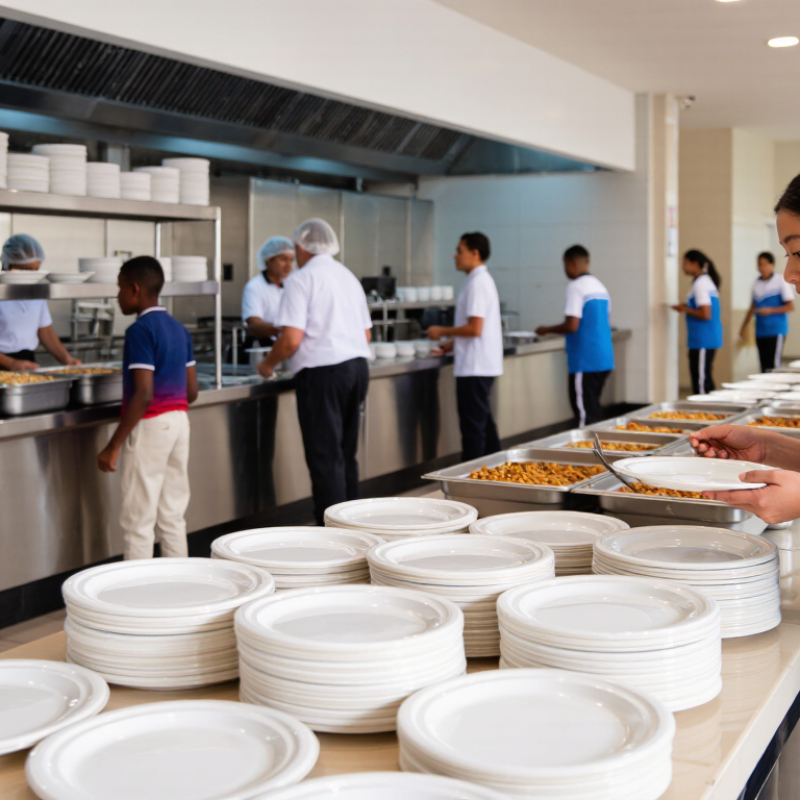
The question “why melamine plates are widely used in cafes and schools” begins with daily practicality. In a busy cafeteria, trays move quickly from serving counters to washing areas. Plates must survive drops, repeated handling, and crowded storage. Melamine tableware is lightweight, rigid, and usually less expensive than ceramic alternatives. Its smooth surface also supports fast cleaning and consistent presentation.

Industry research reflects these priorities. The Freedonia Group’s Foodservice Disposables analysis identifies durability, labor efficiency, and operating cost as central purchasing factors. Technomic’s 2024 foodservice research similarly shows that operators continue seeking equipment that reduces replacement and service pressures. These reports do not prove that melamine is always the best choice. They explain why its practical advantages remain attractive.

Food-safety conditions still matter. Dr. Michael Doyle, a respected microbiologist and former director of the University of Georgia’s Center for Food Safety, has warned, “The major concern with melamine is misuse, especially heating acidic foods at high temperatures.” The U.S. Food and Drug Administration gives similar guidance in its Melamine in Tableware: Questions and Answers document: “Do not use melamine dishware in the microwave.” That advice should not be ignored.

A scratched plate may look harmless. It may not be. Cafes and schools need clear inspection, replacement, and temperature-control procedures. Melamine is useful, but convenience should never replace supervision. Perhaps that is the overlooked part. Its popularity reflects operational experience, not unlimited safety.
Why Are Melamine Plates Popular in Cafes and Schools?

What Are Melamine Plates and How Are They Made?

Melamine plates are made from melamine-formaldehyde resin, a thermosetting plastic. Manufacturers blend the resin with cellulose fibers, pigments, and other approved additives. Heat and pressure then shape the mixture into a rigid plate. Once cured, the material cannot be melted and reshaped easily. It feels ceramic-like, but it is considerably lighter.

The process explains its use in busy cafés and schools. A dropped plate usually resists shattering, while its smooth surface supports faster cleaning. Grand View Research estimated the global melamine market at about US$1.5 billion in 2023. Its report also forecasts roughly 4.8% annual growth through 2030. That figure includes industrial uses, not only tableware. Still, it shows strong demand for melamine-based materials.

Quality control remains important. The FAO/WHO Joint Expert Committee on Food Additives established a melamine tolerable daily intake of 0.2 milligrams per kilogram of body weight per day. Reputable manufacturers therefore test finished plates for chemical migration, heat resistance, and surface damage. Users should avoid microwaves and prolonged contact with very hot, acidic foods unless instructions allow them. It is not glass. Scratches can collect food residue and make cleaning less reliable. That matters. Melamine is practical, but it is not indestructible, and careless handling can reduce its service life.

Why Cafes and Schools Choose Melamine Plates

Cafes and schools choose melamine plates because daily service demands strength, speed, and easy handling. These plates feel lighter than ceramic, yet they remain firm on crowded serving lines. A student can carry a full plate with less effort. Staff can also clear tables faster. Small details matter during lunch.

Melamine plates resist many chips, cracks, and breakages caused by busy cafeteria routines. Their smooth surfaces are usually easy to wash and inspect. Consistent shapes help kitchens stack plates neatly in limited storage areas. Repeated use can reduce replacement needs and support predictable operating costs. Responsible kitchens still follow cleaning instructions and food-contact requirements.

Appearance also influences acceptance. A clean, colorful plate can make vegetables, rice, or pasta look more inviting. Cafes may prefer simple designs that suit different meals. Schools often value practical portions and stable serving equipment.

However, melamine is not perfect. It can scratch, stain, or lose its finish over time. It should not be used beyond the manufacturer’s temperature guidance, especially with intense heating. Some kitchens may also prefer ceramic for formal dining. Choosing melamine requires regular inspection, not blind trust. A plate that looks acceptable may still need replacement after heavy use.

Key Benefits for Everyday Food Service

Why Are Melamine Plates Popular in Cafes and Schools?

Key Benefits for Everyday Food Service

Everyday food service demands more than attractive tableware. Plates must survive drops, rushed washing, and constant handling. Melamine performs well in these practical conditions because it is lightweight, rigid, and resistant to shattering. That matters in crowded school cafeterias. The USDA Food and Nutrition Service reported more than 4.6 billion school lunches served during fiscal year 2023. At that scale, small breakage reductions can simplify purchasing and cleanup.

Melamine also supports efficient serving. Staff can carry several plates without the weight of ceramic. Its smooth surface helps remove sauces, rice, and crumbs during washing. The FDA Food Code 2022 requires food-contact equipment to be durable, corrosion-resistant, and easily cleanable. Suitable melamine tableware can meet these operational expectations when manufacturers provide proper compliance documentation. It also keeps colors and shapes consistent across large dining areas.

Still, the choice is not flawless. The U.S. Food and Drug Administration advises against using melamine tableware in microwave ovens. Deep scratches may also reduce cleanability over time. Very hot, acidic foods deserve careful handling. I have seen busy teams treat “durable” as “indestructible,” which is a costly mistake. Staff should inspect plates regularly and replace damaged pieces. The best results come from clear washing procedures, sensible temperature controls, and buying products tested for intended food-service use.

Safety, Care, and Usage Considerations

Melamine plates remain common in cafes and schools because they are light, quiet, and resistant to everyday drops. In a busy lunchroom, a stack is easier to carry than ceramic. They also often stay cooler to touch. Yet “durable” does not mean heatproof. Food safety guidance generally advises against microwaves, ovens, and direct contact with flames. Very hot, acidic foods may increase chemical migration, especially when plates are old or misused. Follow local requirements and the product’s care instructions.

Care starts with inspection. Staff should check rims, cloudy patches, deep scratches, and warping before service. Small damage matters. A plate with a sharp edge belongs out of circulation. Wash with mild detergent, soft brushes, and clean water. Abrasive pads can roughen the surface. Many products tolerate commercial dishwashers, but the stated temperature and cycle still matter. Dry plates fully before stacking, because trapped moisture can encourage odors and poor hygiene.

Usage habits deserve equal attention. Do not cut aggressively on the plate or use it as a chopping board. Keep it away from hot equipment. Separate damaged pieces promptly. I have seen teams postpone replacement because a plate still works. That judgment is understandable, but not always wise. Records of washing temperatures, replacement dates, and user complaints can reveal patterns. Staff training should include one clear rule: melamine is for serving, not cooking.

How Melamine Plates Compare with Other Tableware

Why Are Melamine Plates Popular in Cafes and Schools?

Melamine plates are popular because they balance low weight, impact resistance, and affordable replacement costs. In a busy school cafeteria, trays can drop onto tiled floors without shattering like ceramic. Staff also handle fewer sharp fragments after accidents. That practical difference matters during lunch rushes. The U.S. Environmental Protection Agency reported 58.2 million tons of wasted food in 2020, showing why durable, reusable serviceware deserves attention. However, melamine does not eliminate waste. Damaged plates still require disposal, and recycling options remain limited in many areas.

Compared with ceramic, melamine is lighter and usually more resistant to chipping. Ceramic feels more premium and tolerates higher serving temperatures. Glass offers a clean appearance, but it breaks more easily and adds weight to washing and storage. Stainless steel is highly durable, though it can look industrial and may become uncomfortable with hot foods. The 2024 UNEP Food Waste Index Report estimated 1.05 billion tonnes of food waste worldwide in 2022. Reusable plates can support lower dependence on disposable items, but only when cleaning systems are efficient.

Safety needs careful handling. U.S. Food and Drug Administration guidance advises against heating food in melamine tableware, especially acidic foods. Melamine is not microwave-friendly. Scratched surfaces also deserve inspection. In real kitchens, rushed staff may overlook them. That is an operational weakness. Choosing the right material depends on temperature, washing practices, noise levels, and replacement budgets—not appearance alone.

Why Are Melamine Plates Popular in Cafes and Schools? - How Melamine Plates Compare with Other Tableware

Comparison Dimension Melamine Plates Ceramic Plates Plastic Plates Stainless Steel Plates Glass Plates
Material Resin-based, hard thermoset plastic Fired clay or other mineral-based material with a glazed surface Usually polypropylene or other thermoplastic polymers Corrosion-resistant steel alloy Heat-treated or standard glass
Break Resistance High in normal service; can chip or crack under severe impact Low to moderate; may chip or break when dropped Moderate to high, depending on polymer and thickness Very high; does not shatter like ceramic or glass Low to moderate; tempered versions resist impact better than ordinary glass
Typical Weight Light to medium Medium to heavy Very light Light to medium Medium to heavy
Suitability for Cafes and Schools Well suited for busy dining areas, cafeterias, and supervised meal service Suitable where a traditional appearance is preferred and breakage can be managed Suitable for lightweight service and younger users; product quality varies widely Suitable for high-impact environments, outdoor service, and institutional use Suitable for presentation-focused service where careful handling is possible
Heat Resistance Good for serving warm food, but not intended for direct cooking or very high heat Very good; generally suitable for hot foods and oven use when specified by the manufacturer Varies by polymer; some types can deform with high heat Very good; suitable for hot foods and many high-temperature applications Good to very good, depending on the glass type; sudden temperature changes may cause breakage
Microwave Use Not recommended; melamine can heat through the food and may be damaged Often suitable if free of metallic decoration and approved for microwave use Only when specifically labeled microwave-safe Not suitable; metal can cause arcing Often suitable when labeled microwave-safe and free from thermal shock risks
Dishwasher Use Commonly dishwasher-safe; follow the product’s care instructions Commonly dishwasher-safe, although decorative finishes may require special care Many types are dishwasher-safe, but high heat may shorten service life Generally dishwasher-safe and highly resistant to repeated washing Often dishwasher-safe; impact and thermal shock remain considerations
Surface and Stain Resistance Smooth, non-porous surface with good resistance to everyday stains Glazed surfaces are generally non-porous; damaged glaze may be harder to clean Non-porous, but some foods and oils may leave stains or odors Non-porous and easy to sanitize Non-porous and generally easy to clean
Noise During Use Quieter than ceramic, glass, and stainless steel Can be relatively noisy when stacked or handled Generally quiet Can create noticeable clatter on hard surfaces Can create noticeable clatter and may break if dropped
Long-Term Durability Good for repeated institutional use; surface scratching can occur over time Good when handled carefully, but breakage and chipping can increase replacement needs Depends strongly on the polymer, thickness, and washing conditions Excellent for demanding, high-use environments Good under careful handling; breakage risk remains higher than with metal
End-of-Life Considerations Recycling options are limited in many areas because melamine resin is a thermoset material Not commonly accepted in curbside recycling; may be reusable for a long service life Recyclability depends on the polymer type and local collection system Highly recyclable through established metal-recycling systems Reusable, but many recycling systems do not accept household plate glass with container glass
Main Advantage A practical balance of light weight, durability, appearance, and quiet service Traditional appearance and strong heat performance Low weight and generally low replacement cost Exceptional impact resistance, hygiene, and recyclability Neutral appearance and good visibility of food presentation
Main Limitation Cannot be used in a microwave and should not be exposed to direct high heat Heavier and more vulnerable to chipping or breakage Performance, heat resistance, and durability vary considerably by material Can be noisy and may become hot to the touch Heavier and more vulnerable to breakage or thermal shock

Note: Performance varies by product design, material grade, thickness, and care instructions. Always follow the manufacturer’s guidance for temperature limits, dishwasher use, and food-contact safety.

FAQS

What are melamine plates made from?

They are made from melamine-formaldehyde resin, cellulose fibers, pigments, and approved additives. Heat and pressure shape the mixture into a rigid plate.

Why do melamine plates feel like ceramic?

Their smooth, firm surface resembles ceramic. They are much lighter and usually resist shattering when dropped.

Why do cafés and schools often use melamine plates?

They handle busy serving lines, crowded tables, and frequent washing. A student can carry a full plate with less effort.

Are melamine plates completely unbreakable?

No. They resist many chips, cracks, and breakages, but they can still suffer damage. It is not glass.

Can melamine plates go in a microwave?

Avoid microwave use unless the instructions specifically allow it. Intense heating may damage the plate or increase chemical migration.

What foods require extra care with melamine plates?

Avoid prolonged contact with very hot or acidic foods unless permitted. Hot soup and acidic sauce deserve attention.

How should users inspect melamine plates?

Look for deep scratches, stains, cracks, or a damaged finish. Scratches can collect food residue and make cleaning less reliable.

How are melamine plates produced?

Manufacturers mold the mixture using heat and pressure. After curing, the material cannot easily melt and reshape.

Do melamine plates last forever?

No. Repeated use can reduce their finish and service life. A plate may look acceptable but still need replacement after heavy use.

What should kitchens consider before choosing melamine plates?

Consider temperature limits, cleaning instructions, storage space, and inspection routines. Melamine is practical, but careless handling weakens its advantages.

Conclusion

Melamine plates are made from a durable resin formed under heat and pressure, creating lightweight yet sturdy tableware with a smooth, attractive surface. The reason why melamine plates are widely used in cafes and schools is that they can handle frequent daily service while being easier to carry and less likely to break than ceramic or glass. Their practical design makes them suitable for busy dining areas, cafeterias, classrooms, and outdoor food service.

Key benefits include resistance to chipping, simple cleaning, stackability, and a wide range of shapes and colors. Compared with disposable products, melamine plates can be reused many times, helping reduce waste and long-term replacement costs. However, they should be used responsibly: they are not intended for ovens, stovetops, or microwave heating, and damaged or deeply scratched plates should be replaced. With proper care and suitable food temperatures, melamine plates offer a convenient, economical, and dependable option for everyday food service.

Madeline

Madeline

Madeline is a dedicated marketing professional with a wealth of expertise in our company's core offerings. With a keen understanding of the industry, she brings a unique perspective to her role, consistently delivering high-quality content that highlights the superior aspects of our products. As......